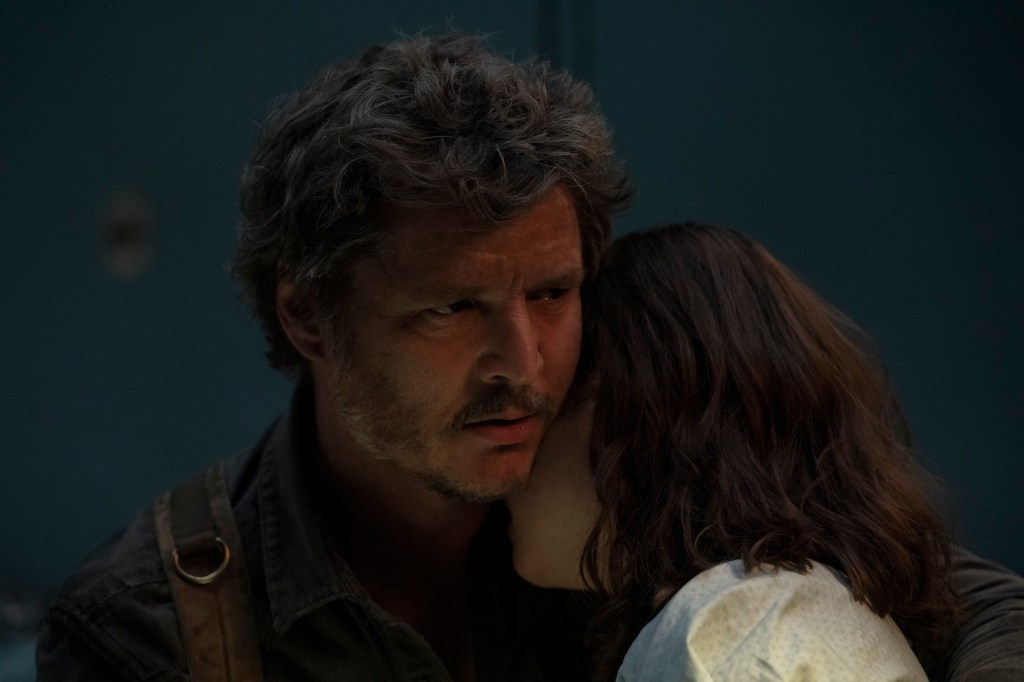
The first season of HBO’s latest fiction blockbuster series ended on a high note last Sunday. The Last of Us steamrolled popular culture in the past weeks as it managed to captivate its audience with a heart-wrenching dramatic epic about family, love, violence and trauma, and about what people do when pushed over their breaking point. Opinion.
Warning: Spoilers ahead for the entire first season!
Since Game of Thrones, in every season of television programming, HBO offers a cerebral and sometimes low-key Shakespearian action-drama fiction as their flagship program. After Westworld, and in the hiatus of House of the Dragon, that flagship series has been The Last of Us. And what a glorious nine episodes it was for the small screen visual art form.
It seems that the golden age of television continues. TV series, as a genre, is actually reaching greater heights than it had ever before. The Last of Us is a shining example of this. It is both a video game adaptation and a classic story. It’s delightfully well written, acted, shot and scored. Apparently, HBO takes its flagship series much more seriously than Netflix does. (Yes, I’m referring to the Witcher series dumpster fire.) The Last of Us immediately made headlines when it took off in January. Every episode has been a success, gaining momentum like an unstoppable reinforced truck armed with a snow plow aimed at the scores of Infected on the road.
The thing about zombie genre (excuse me, in this case, infected-themed) fiction is that it grew stale by the end of the 2010s. Its most prominent example, The Walking Dead, stopped being thrilling years ago. The entertainment value of the shock effect of gore and violence-filled survival action horror wore off. Besides, our own world feels more and more like we are living in the last season of a TV series where the writers are throwing more and more nonsensical disasters at the characters to keep things interesting.
Which is why it is surprising that The Last of Us works. But upon closer inspection, the nine-episode apocalypse adventure isn’t a zombie series at all. The Walking Dead lured in viewers with zombie action to get them hooked on a more and more ridiculous soap opera. The Last of Us lured us in with zombie action to get us hooked on a high-quality HBO character drama/anthology on love, power, violence, emotion, desperation and grief.
Based on the events of the critically acclaimed video game of the same title, the series follows the story of two protagonists, Joel and Ellie. Joel (Pedro Pascal) is single father turned grim survivalist smuggler. Ellie is a delightfully abrasive and cheerful teenage girl with a taste for “shitty puns” and a penchant for violence. They live in a dystopian, apocalyptic United States. In this alternate history, cordyceps, a mutated pathogen inspired by the zombie-ant fungus,rapidly spread around the world in 2003. It turned most of humanity into mindless hosts which led to the collapse of civilization. Having tragically lost his own daughter on the eve of the outbreak, former Texan construction contractor Joel (now lives in Boston, in a small surviving pocket of civilization called the Boston Quarantine Zone.
Joel lives day to day, just going through the motions, not caring what mundane job he can take from FEDRA, the semi-fascist de facto military junta that now governs the remainder of the United States. Joel’s brother goes missing, so he and his similarly scarred and aging partner Tess (Anna Torv), both experienced smugglers, prepare for a cross-country rescue expedition. The only way that Joel and Tess find to do this is to make a deal with their society’s underground partisan militia and FEDRA’s sworn enemy, the Fireflies. They have to take a young girl named Ellie (Bella Ramsey) from point A to point B, no questions asked, to get a vehicle and supplies for their travel.
Joel and Tess almost immediately find out that the reason for Ellie’s importance is her immunity to the disease. Soon after, they lose Tess to a pair of scary Infected. But not before Joel swears to a dying Tess that he would take care of Ellie. From that point, the series chronicles Joel and Ellie’s travel through the United States, searching for Ellie’s Firefly benefactors and Joel’s brother. Meanwhile, the man who lost his little girl and the girl who grew up an orphan form a surrogate father-daughter bond.
The thing about this series is that you finish the last episode and then you don’t want to watch anything else, you just sit in front of the screen, frustrated and contemplating the nature of man and what is it about this story that got you hooked.
The story takes Joel and Ellie through risky situations. It has them meet dangerous figures. It also chronicles character backgrounds for multiple people – Telling us human stories of love, loss and perseverance through flashbacks that in two cases span almost entire episodes.
The creators didn’t have to do that. When Joel and Ellie find the apparently abandoned, fortified home of one of Joel’s contacts, the story didn’t need a backstory on the man who lies dead in the next room with his husband in his arms. We didn’t need to bawl our eyes out over how a doomsday prepper, who is actually a deeply sensitive introvert, found love when a highly intellectual and extroverted man fell into one of his home defense traps.
But the creators did do just that and as you approach the final episode, you start to understand why they did. It’s because The Last of Us isn’t a zombie series. It’s not about the horror-action thrill. It’s not even about survival in the apocalypse, or tribal politics. It’s not a series that makes you excited to contemplate what your own survival strategy would be. This series is multiple stories in one, with multiple meanings. It’s about young love. It’s about how much pain a person can live with. It’s about a young girl’s coming of age, growing from cheerful child to hardened fighter. (I actually hope we see much more of that in the next season! Go women characters in realistic dystopian fiction!)
And it’s also about the emotions of men. Bill and Frank (Nick Offerman and Murray Bartlet, respectively), the couple whose story we see in a flashback as Joel and Ellie approach their fortified house are two men who are different from each other. In their former lives they would have probably never met. Their backgrounds are vastly different. But both have an emotional depth. Both are capable of great love. The story of their relationship and bittersweet marriage is moving not just because it shows us queer people as relatable, actual real-life people but also because they make gay love just so manly.
In Joel we see a jaded man. A family man who has lost his family. A man who has discovered his capacity for violence in the face of extreme stress and danger. Much like an aging Geralt of Rivia-shaped father figure, protector against the monsters who is a monster himself, we root for him to protect Ellie by using bursts of high-concentration violence.
As Joel finally finds his brother Tommy, living peacefully in a commune with his new wife, he lets go of the tight grip he has on their situation. When he doesn’t have to be strong for Ellie, he almost immediately breaks down in a series of panic attacks. Pedro Pascal beautifully portrays one man’s emotional vulnerability, the depth of his fears, the weight of his years, the realization of his physical prowess fading with age. That’s not something we often see. That’s not something action heroes or survivalist horror leads are allowed to show. They are allowed to be bloodthirsty when the story calls for it, they are allowed to cry when their wives die in childbirth. But they are not allowed to show us the true emotional vulnerability, the anxiety, the fragility that lurks below the surface.
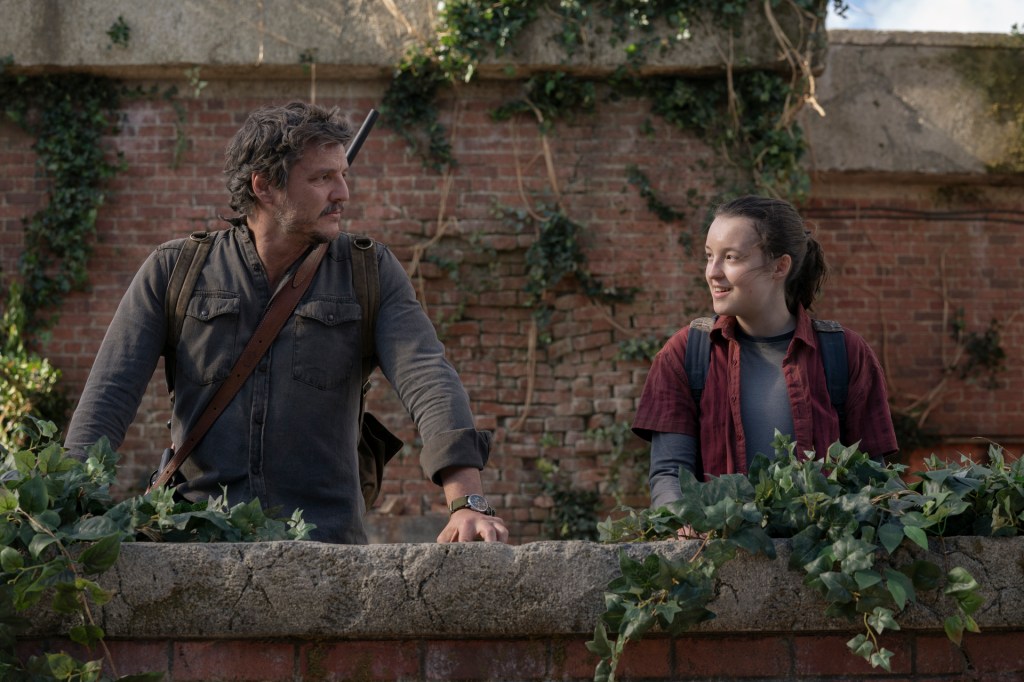
Joel himself tells Ellie how he once tried to take his own life, and how he feels like his life got back its meaning after his de facto adoption of her. When Ellie is taken captive by a sketchy preacher who turns out to be a pedophile, we secretly do approve of Joel torturing the preacher’s men to get information on how to get her back. But what we don’t immediately see is how close he is to his breaking point. How his mental health hinges on the wellbeing of his surrogate daughter.
After all, he has already lost a daughter. And not to the disease either – His daughter Sarah (Nico Parker) was killed on the day when the outbreak started, shot by a soldier who was ordered to kill Infected and civilians alike. He had already shown his violent side when earlier, during their escape from Boston, a soldier had pointed his assault rifle at them. Joel then quickly sprang into action, beating the man senseless. It’s just that throughout the series we see so much of the Joel-Ellie relationship and their easygoing chemistry that we kind of forget that this goodhearted dad can turn into a remorseless killing machine.
So when the season finale twist comes around and we learn that the Fireflies aim to kill Ellie to get to the part of her brain that’s responsible for her immunity, in retrospect it’s not a surprise that Joel finally snaps. In a chilling action sequence, he shoots his way through the Fireflies’ hospital, carving a bloody path through armed militia men. The whole scene is the most video game-like in the entire season and yet it doesn’t glorify violence. We watch in shock as Joel kills people in cold blood left and right. He kills people who are laying down their arms. He stabs a wounded man to death. He empties multiple guns, taking the weapons of fallen opponents until he reaches the operating room where doctors are prepping Ellie for surgery. Joel’s rampage is underscored by a somber version of the series’ main theme, and the shootouts are intercut with images of the bodies he has left in his wake. In this, we finally see how deeply love, affection, anxiety, violence and cruelty are wired in a man’s mind – And how those wires can get tangled up when he’s pushed past his breaking point and his family is in danger.
These emotions aren’t unique to men. These are deeply rooted in the human experience. But for too long there have been taboos on how much a story could explore men’s emotional range. And showing those emotions is healthy. When Joel breaks down in tears under the pressure of his anxiety, you, the viewer, want to cry too. It’s a cathartic experience. Pedro Pascal’s Joel has been praised for showing the strength of non-toxic masculinity. That terminology is not necessarily fortunate, but it is true that Joel shows a range of emotions tied to masculinity that we see too little of in modern stories.
The Last of Us depicts aspects and emotions deep within men’s minds that we don’t often talk about. Some of these aspects are humanizing and heartwarming. Others are even more chilling than the stone-cold stoic facade that violent action heroes usually present. But the most shocking revelation is that through the example of this ordinary man, we discover that we all have these inside of us. And these deeply hard-wired emotions and emotional states – love, affection, anxiety, violence, cruelty – are much more connected to each other than we care to admit.
 PopCulture Station
Hozzászólás