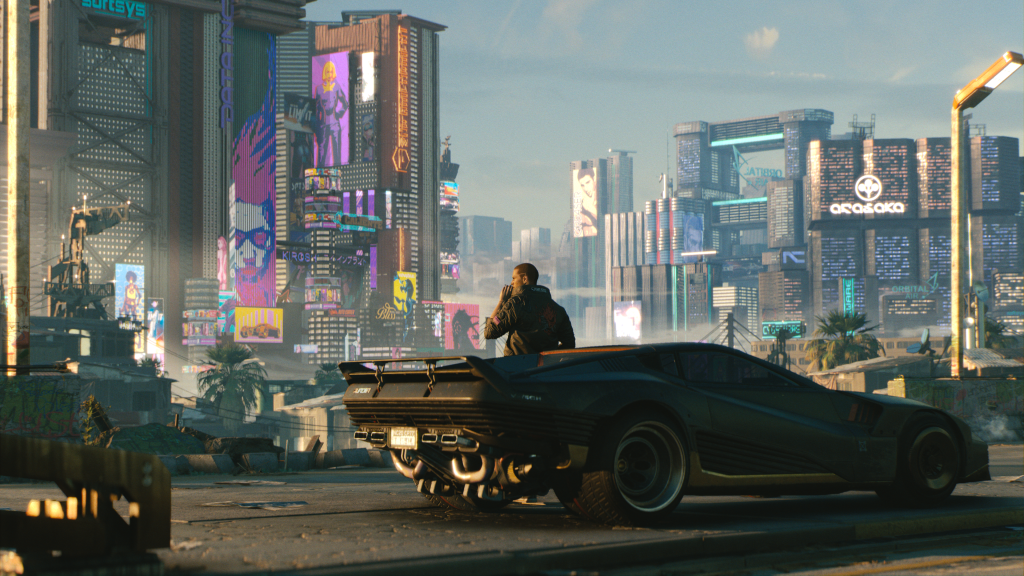
It’s July 2023, Cyberpunk 2077 was released two and a half years ago. It’s a hot, summer afternoon and having nothing else to do, I decided to start a new playthrough, venturing into Night City once more. I’m admiring my newest V: A cold, pragmatic corporate woman, with long, black hair neatly pulled into a pony tail and white, cyber-implanted eyes staring at her own reflection in a bathroom mirror somewhere deep within Arasaka Tower. And I get this feeling that I’m already in, immersed in the 2077 corpocratic dystopia of Night City.
Cyberpunk 2077 has an allure. Returning back to Night City, driving around on a motorbike on the streets, with Johnny Silverhand as the demon sitting on your shoulder, you feel immersed. You want to do side quests, live the story again, and discover more. But why? Why does this game, with its complicated history, have such a position and a dedicated following today? Cyberpunk 2077 was shot in the head by CD Projekt on the day it was released, and then it had to crawl its way out of a landfill to get back on its feet and try to fight for its right to exist. And it did. There is something in this game, a soul, a beating heart that drives it to success. What makes Cyberpunk 2077 so compelling?
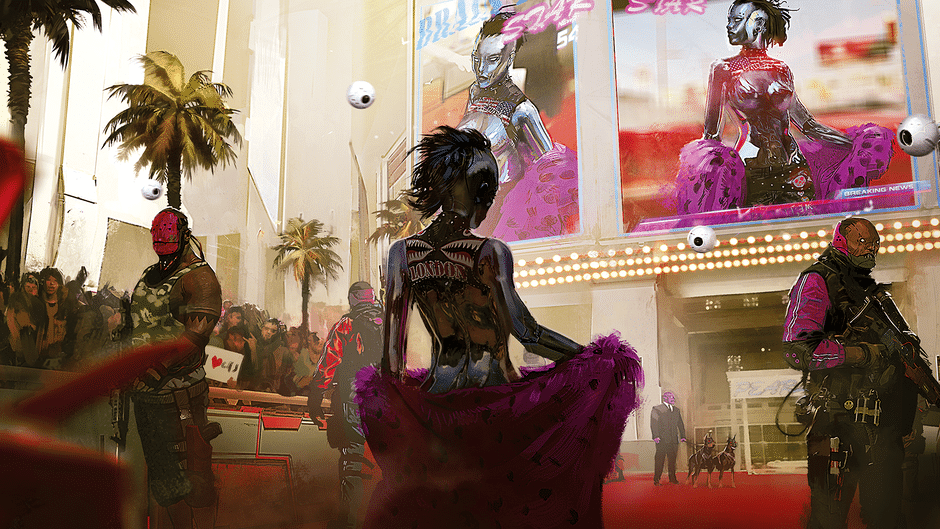
Night City sure helps. It’s the scene, the prop behind the story, and boy was it crafted with love. Sometimes you see the seams. The repeating, limited hair styles. After all, this is a video game and video game world inhabitants are legally required to wear one of no more than forty haircuts or their world will collapse. You notice the awkardness of NPC placements, or the repetitive nature of side gigs. But the world works. Night City was made in a way that three things are true at the same time: The city is laid down and built up believably; it is in fact cyberpunk; and it is gorgeous. It is cyberpunk, but it does not shove neon lights down your throat every waking second. It’s not cheap plastic propped up as glossy polymer. It’s moderate 80s nostalgia with some futurism and deconstructivism mixed with retro-Japanese sci-fi, detective noir and even a splash of Americana on top of the cyberpunk base style. It is believable but has an aesthetic color palette, shapes, atmosphere.
Night City is one of the video game worlds where you don’t fast travel because it’s a joy to ride through it. Not just the glossy corpo plaza and international style downtown, but the Eminem-video-clip-worthy underclass slums too. Warts and all.
But that’s not enough. That’s just the backdrop. And the combat, which can be repetitive after a while, the city, which can feel boring after hours upon hours of cruising through it, the endless stream of quests and side quests and leveling up and grind wouldn’t work if there wasn’t a meaning, a story, a human element. So what is it about Night City that just grabs you and pulls you in?
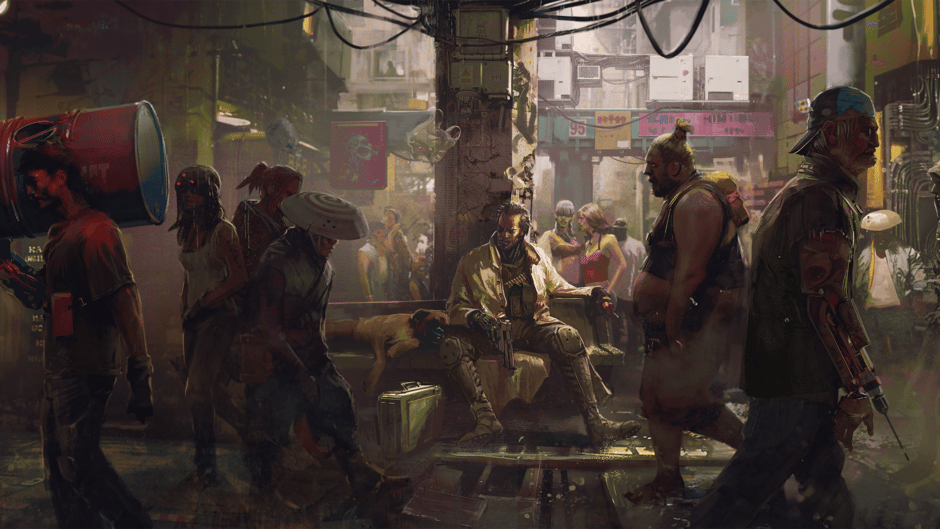
It’s the human connections. The village you build. The communities and their relationship with the powers in charge and their history. That’s where you find the heart of Cyberpunk 2077.
As V wakes up to find that their time is running out, they barely have anyone left. Who do you have, really, after the prologue? Misty, Viktor, maybe Mama Welles, and that’s it. And the psycho in your head rambling about Arasaka and corporate greed. Over time, you build conections, alliances, friendships, like in any other good rpg video game.
But what’s interesting is that from the beginning, you also periodically see Night City from Johnny Silverhand’s eyes. What it was like fifty years ago. What Rogue and the community of mercs was like then, the same community that you, V, are a member of today. The people then and now.
There is an elusive, timeless charm in the story of Night City. Generation after generation struggles, tries to survive, to thrive, to live their lives on the same streets, decade after decade. There is the Welles family and their complicated relationship with the Valentinos. There is Judy and her relationship with the Mox, dolls, teaming up with the exploited and powerless to find strength together. There is Panam and the Aldecaldos, outcasts in the corporate world but a power to be reckoned with. There is River and his complicated relationship with his family, the NCPD, gangs, cops. And then there is Rogue, the Afterlife community, mercs, and their roots in the Atlantis, the anarchists of fifty years past.
All of these come together in Night City, which, with all its component elements, isn’t just a blob of masses, neon lights, guns and corporate assassins. It’s not a Netflix series with a high production value but little meaning beyond nostalgic sci-fi pop corn fun.
Because in Night City, the focus is not the city, it’s the village. The band of fighters you find in the Afterlife, the tentative support from the warrior queen, Rogue, who, despite her cold exterior, has a good heart. It’s about Judy, who calls you in the middle of the night because the girl you two rescued is lying in the tub without a pulse and she’s panicking. It’s about Panam and the Aldecaldos who you help save and who can become your new family if you want them to. It’s about those streets where Johnny Silverhand was raving about Arasaka fifty years ago, and that one faithful fan yoi can meet that still remembers those concerts, despite the fact that the club Johnny played in has been turned into a noodle kitchen, no one wants the faded merch he’s selling, and you’re the only person who’s interested in the dusty vinyl records he keeps under the counter like some rebel treasure.
It’s those same streets where fifty years later, Jacky Welles, young goofball merc, promises you that you two will hit the major leagues together. It’s those same streets where he bleeds out in the back of a Delamain taxi.
Cyberpunk 2077 repeatedly asks you the question: In the face of death, do you just fight to survive, to live another day in peaceful obscurity? Or do you go out in a blaze of glory as a legend? And after the longest time you relize that the story isn’t about you, the prospective legend of Night City. It’s about the people who remember you. It’s about those villages, and their history. It’s about the Afterlife community which will probably name a drink after you. A community that still remembers a past when mercs didn’t serve corporations at the bidding of greedy fixers. It’s about Misty and Vik and Mama Welles who will miss you and organize an offrenda for you when you’re gone. It’s about the Aldecaldos who will drink to your memory sitting around fires somewhere in the deserts of the Midwest, between abandoned ghost towns.
Near the end of the story, when Misty takes you to a rooftop terrace where you can clear your head, you sit and think and take it all in. And look around you. Night City is that skyline in front of you, the promise of danger and fame. But Night City is also that little forgotten esoteric shop downstairs and your dead best friend’s girlfriend who cared for you when you were between life and death. And that old ripper doc who rents her basement, watches box matches, and his poor heart can’t take another loss. Night City is the nomad girl you call on that rooftop, in the middle of the night, once you made the most important decision of your life, and she tells you to stay where you are as while she comes to get you
Night City is all that and more. Night City is the plastic garden chair on that rooftop in which you sit. That piece of cheap molded plastic that has seen winter rains and bright summer sunshine year after year, bends dangerously because of material fatigue but will still be there year after year once you’re gone. Jacky once sat in that chair and made a decision about his life. Now it’s your turn. After you, there will be others, looking at the same cityscape and the parking lot behind the building. Night City is its people, its communities, and the stories that those communities, those little villages remember.
You can be a part of that, and that’s where you find the heart of Cybperpunk 2077. Not in the car chases on the highway, the saka ninjas with mantis blades chasing you as you speed towards your blaze of glory. But the drink the Afterlife will name after you, the memories you make, the people you think about as you sit in that shitty plastic chair on the rooftop above Misty’s Esoterica. That’s what gives all of this meaning.
 PopCulture Station
Hozzászólás